Media Relations? Youre Supposed to Be Good at Communicating, Right?
Media Day. The day that I’ve been hyping up in my mind…the day I get to shine…or flop…or manage to do a little of both.
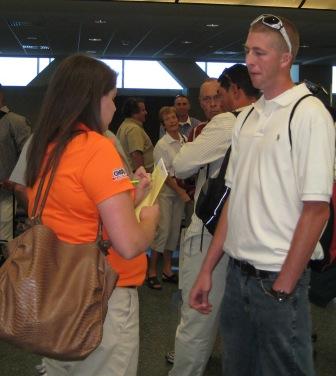 I was putting myself to the test, asking, “Onalee, you’re good at communicating, right? After all, you were an English major, you’re a writer, a talker, a listener. Are you ready to show these players who’s boss? Are you ready to show the media that you are fully capable of helping them get the interviews and information they need? Are you ready to show the front office staff that there is a reason they hired you?”
(And, yes, it was a very intense ride to the stadium–by myself– giving myself my own pep talk).
In my mind, media day went off without a hitch. The media was satisfied, the players were extremely cooperative, and I survived. However, there was one very (seemingly) large barrier in my way.
Obstacle numero uno: I don’t speak Spanish*. 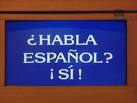
Note: I just managed to scrape by in my Spanish classes in
college…and have always been a tad terrified of the inability to
communicate with another person.
The language barrier is probably the most difficult thing I have encountered thus far. With 11 Spanish-speaking players, and some of them being pretty limited in their English, it can sometimes be difficult to relay the information you want. And, of course, I had a LOT of information to relay.
Last night at the host family dinner, all of the players received a player info packet, outlining important information concerning the team and Boise. There were also some fun bio questions included that the guys had to fill out. To make it easier for some of the players I translated the packets into Spanish…using Google Translator of course.
But last night, I was really bummed. None of the Spanish-speaking players filled out all of the bio questions, and I was afraid that the Spanish translation was a complete and utter failure. Remember my pep talk? This is what it was mostly about–figuring out how I could communicate with the players whose language I didn’t speak, whose language I had tried to learn, but never was successful at mastering.
To make the day run more smoothly, we didn’t split the team up into pitchers and catchers and then position players as most teams do; nope, we split them up by language. And who was in charge of doing so? You’ve got it…me.
It’s funny how you think talking louder and more sternly makes someone understand you better. Anyway, I stood at the top of the home dugout and as each of the players came out of the dugout, I asked (very forcefully), “Habla español?…Si?” If they nodded or said “si” back, I pointed to centerfield and said, “Then go take your picture.” It worked, but it was frustrating for me. I didn’t like that I couldn’t communicate fully with them, that they couldn’t ask me questions like so many of the other guys were doing, that I couldn’t get to know them as well or as quickly because I didn’t speak their language.
But this soon changed. Those bio sheets? I was determined to get those questions answered–whether it meant me trying to act out the questions so they could understand me.
After lots and lots of laughter (from both me and the players) and butchered Spanish, I managed to get every single player to fill out the questions. It took patience (from both parties) and a good sense of humor, and–to get all girly and cheesy on you–I think it was kind of a bonding experience. I got to know some of the Spanish-speaking players better today than I know some of the American players. It showed me that, sometimes, communication isn’t all about talking and writing, sometimes it’s about laughter and listening and cooperation.
Even so, I’m investing in Rosetta Stone for Spanish this weekend.
*I don’t speak Korean either, but I’m lucky enough that they have a translator—so that’s a story for another time.
Normal
0
false
false
false
MicrosoftInternetExplorer4
 A Bird's Eye View